Compare A/B grades through blooms, stems and batch consistency, with illustrated examples for different flower types.
A/B grades help buyers compare bloom, stem, foliage and consistency across a batch of cut flowers. Within the same variety and specifications, Grade A generally places more emphasis on presentation and uniformity. Grade B still needs to be assessed for bloom integrity, stem support and the condition of the actual batch. Grade B does not mean damaged flowers, and Grade A does not mean one fixed stem length or bloom size for every variety.
Confirm the variety, grade, stem length, bloom specification and opening stage together. A grade letter alone leaves too much room for different expectations.
What is the difference between Grade A and Grade B?
| Check | Typical Grade A emphasis | What to confirm for Grade B |
|---|---|---|
| Bloom and shape | Full, well-formed blooms and a more uniform batch appearance | Bloom integrity; size and uniformity for the quoted variety and specifications |
| Stem | Strength, straightness and consistent presentation | Straightness, support and the quoted length and thickness |
| Foliage and finish | Leaf condition and clean stem preparation | Actual foliage condition, cleanliness and finish |
| Batch consistency | More consistent blooms, stems and opening stages | Whole-bunch variation and whether it suits the intended use |
This checklist brings together common inspection dimensions. It is not a universal acceptance standard. Mould, rot and serious breakage should not be treated as routine Grade B variation.
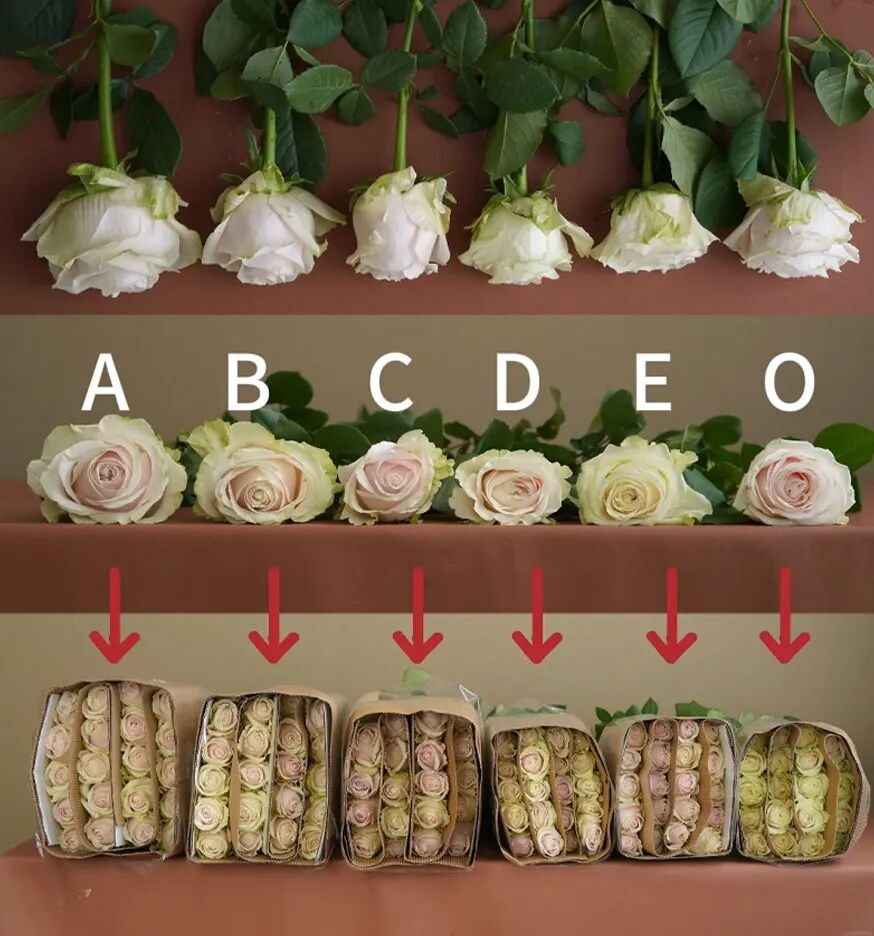
A rose example: why size alone is not enough
Rose varieties naturally differ in flower form and growth habit. A smaller-headed or shorter-stemmed variety cannot be judged against another variety on size alone.
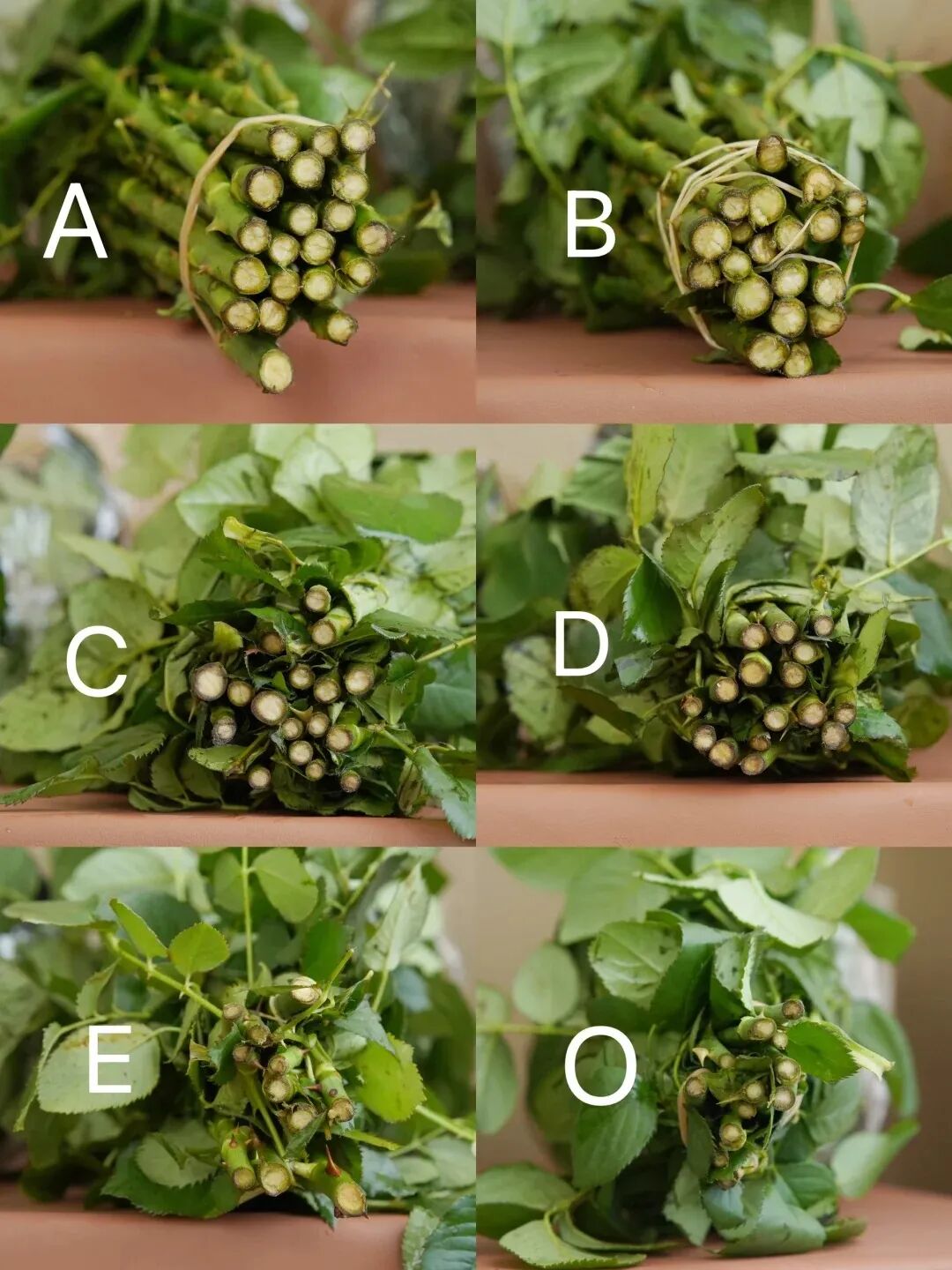
Stem-length thresholds can vary with the variety and buying specification. For Pink Avalanche, compare stem length, bud cup size, stem thickness and opening stage together. Confirm which specifications apply before comparing offers.
The following is a Pink Avalanche grading example, included to show why several measurements are considered together. It is not China Flower Farm's fixed specification for all roses or a substitute for the agreed order specification.
| Pink Avalanche reference measure | Grade A | Grade B |
|---|---|---|
| Stem length | ≥70cm | ≥65cm |
| Bud cup size | ≥5.0cm | ≥4.5cm |
| Stem thickness | ≥5.0mm | ≥4.5mm |
| Opening stage | Stage 2; confirm opening condition | Stage 2; confirm opening condition |
Confirm how bud cup size is measured rather than assuming it means fully open bloom diameter. Confirm what the quoted opening-stage number looks like as well. Confirm the measurement point, unit and flower condition; do not apply this table to every rose variety.
Carnations, hydrangeas and stock need different checks
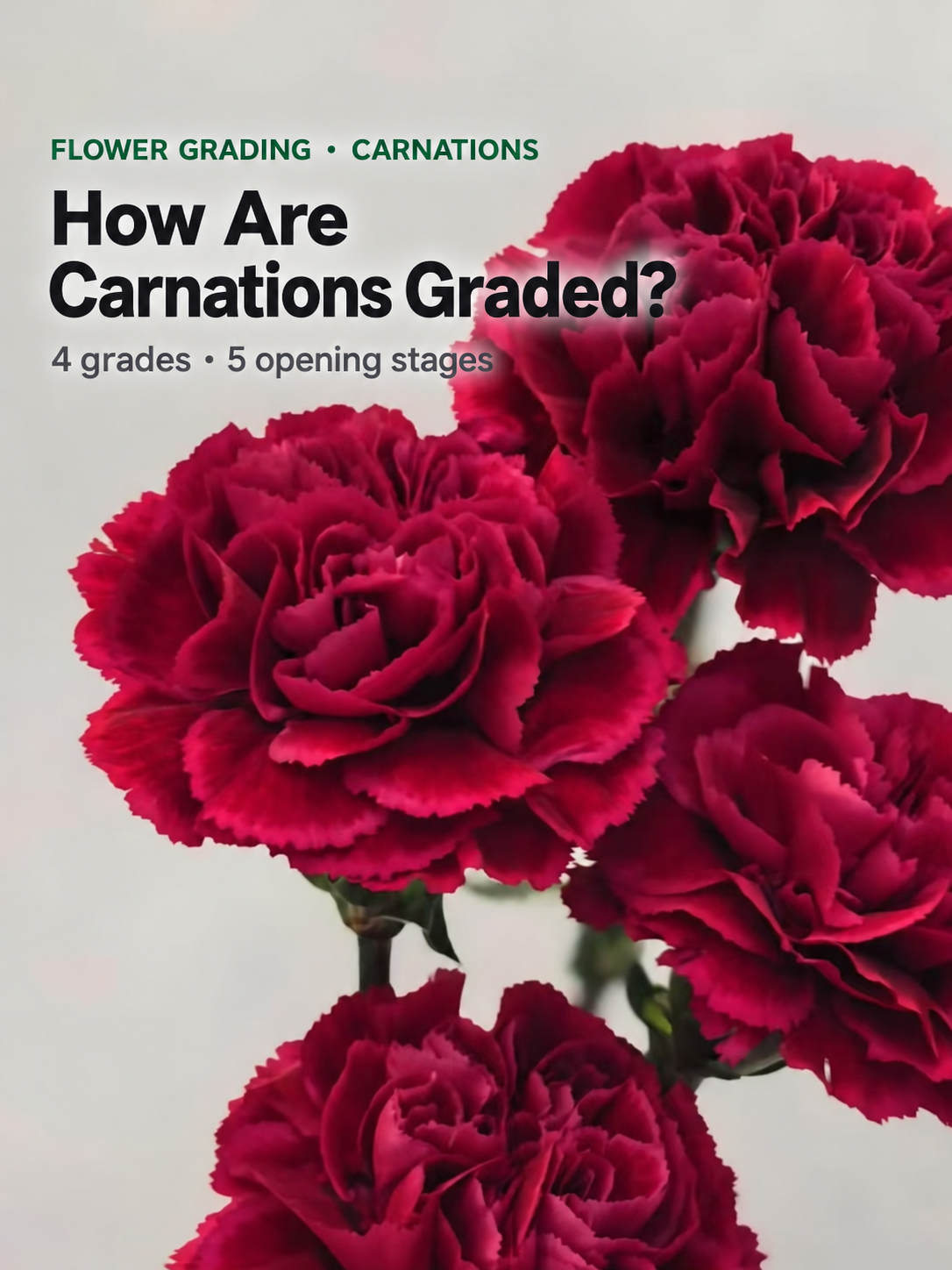
Carnations: compare stem length, bloom specifications and stem straightness together, including consistency within a bunch. Confirm opening stage separately rather than assuming a grade tells you how long flowers can be held or when they will open.
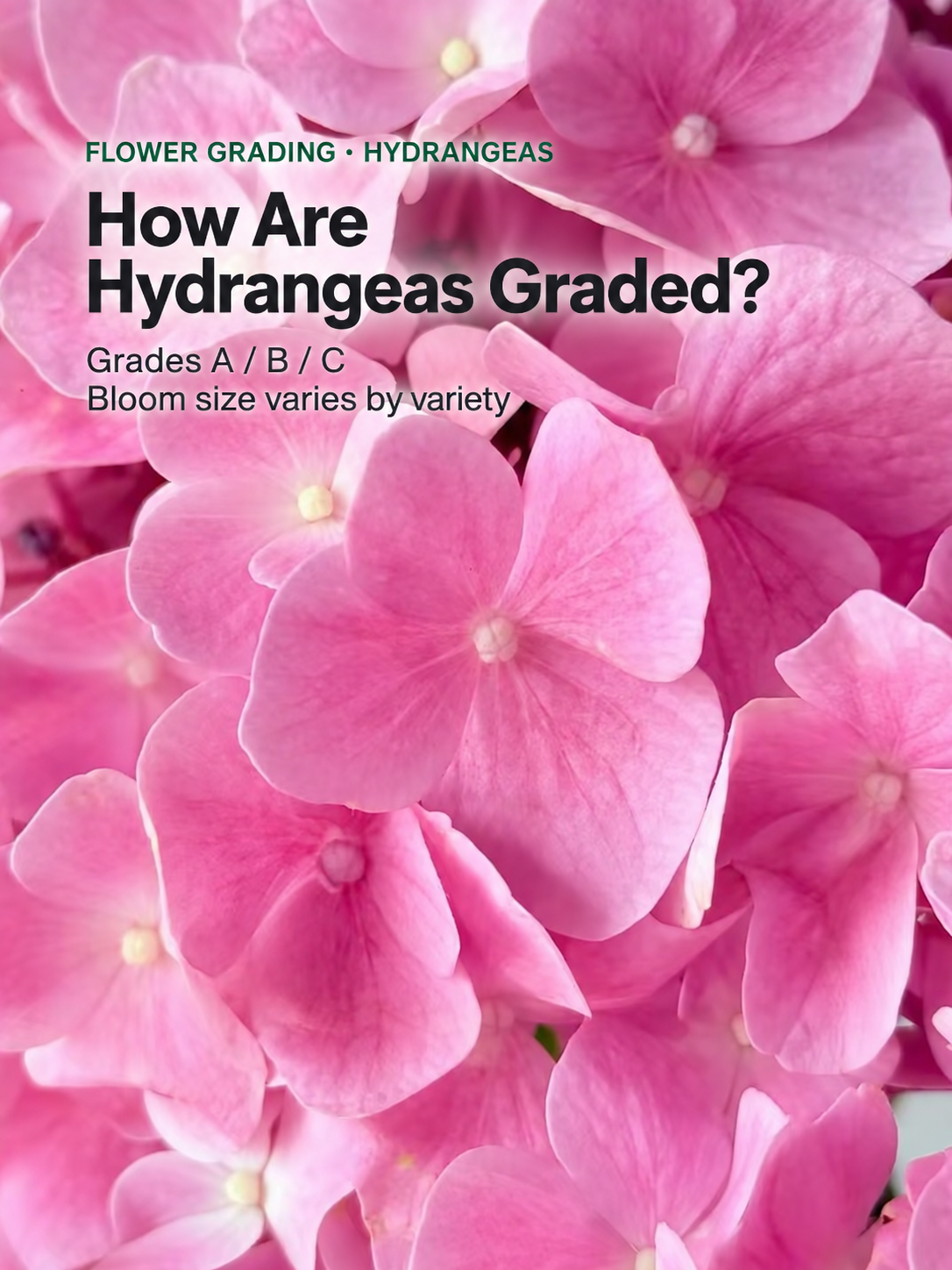
Hydrangeas: check stem length and flower-head diameter for the named variety or series. Size criteria can differ across hydrangea color groups and series. Specify the variety or series, color and required head diameter instead of asking only for a large Grade A hydrangea.
Stock: compare stem length and the length of the flowering spike. A spike is the section carrying multiple flowers, not the diameter of one bloom. Confirm color and single- or double-flowered form alongside those measurements.
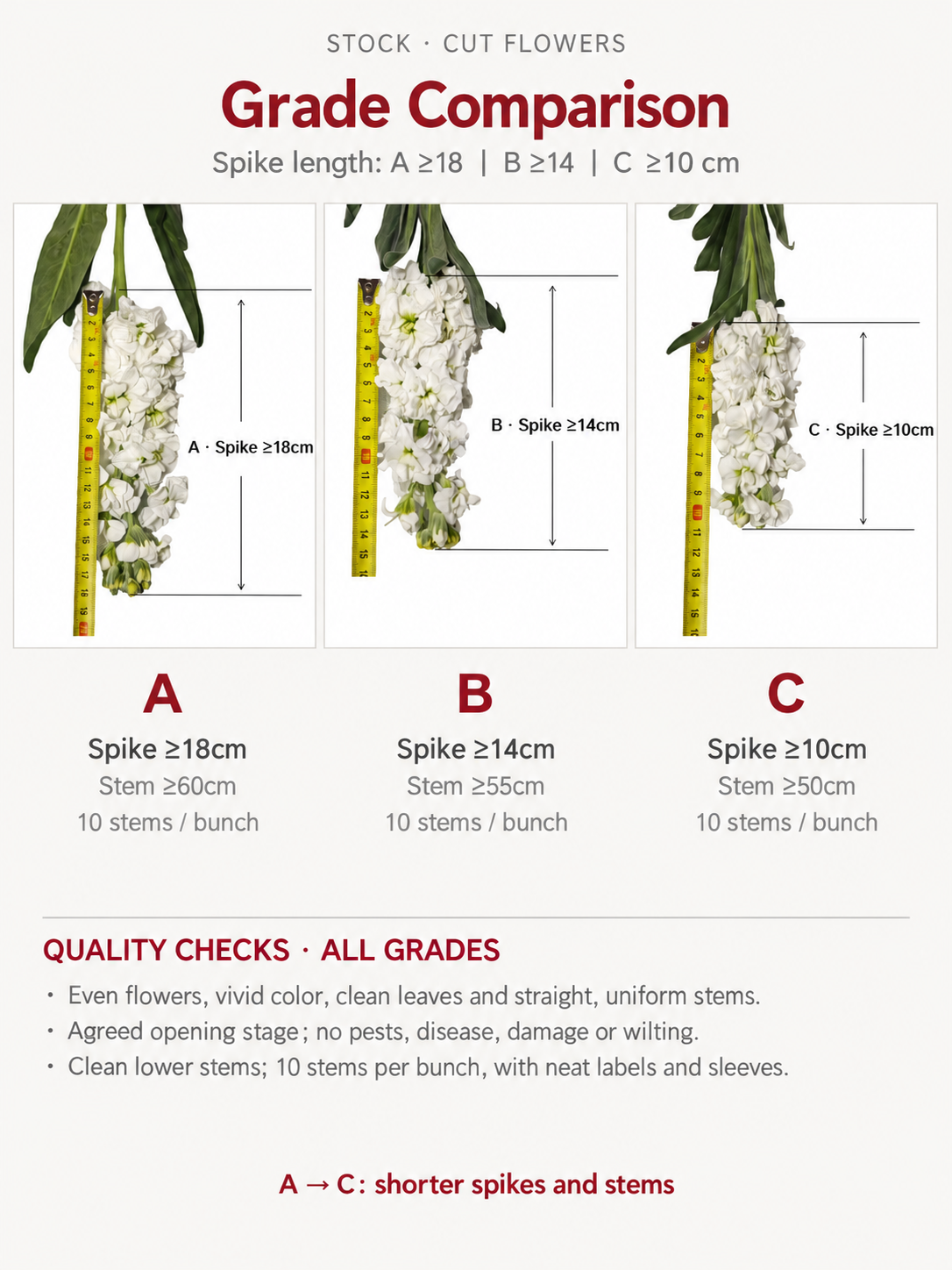
These examples illustrate why a single rose measurement cannot serve as the grading specification for an entire flower catalog.
Which grade suits your customers?
For premium bouquets, gifts and close-up displays, consider Grade A batches when uniform presentation is important. Confirm the variety, flower form, length and opening stage as well.
For everyday bouquets and budget-sensitive wholesale programs, compare Grade B batch photos with the quoted specifications. Include trimming, preparation labour and usable flowers in your cost comparison, rather than considering only the price per bunch.
For weddings and events, start with the design, color, use date and transit time. Do not assume one grade is reserved for weddings or another is only suitable as filler. Different parts of a design may need different flowers and specifications.
What should you confirm before ordering?
Include these details in your inquiry:
- Variety, color and A/B grade.
- Required stem length and any important bloom or spike measurements.
- Bunches per variety, stems per bunch and acceptable substitutions.
- Destination, requested arrival date and actual use date.
- Appearance differences you cannot accept, with reference images where helpful.
Ask to see whole bunches alongside close-ups of blooms, stems and foliage. A single attractive stem cannot show the consistency of the whole batch. Catalog images help identify varieties; confirm the flowers available for your shipment separately.
Frequently asked questions
Does Grade B mean the flowers are less fresh?
No. A grade label alone does not establish freshness. Harvest or sourcing timing, storage, pre-cooling and transit need separate confirmation.
Does Grade A guarantee longer vase life or lower transit loss?
No. Variety, opening stage, post-harvest treatment, transport and care after arrival all matter. Discuss any specific vase-life or use-date requirement for the actual flowers and shipment.
Can I mix varieties and grades in one order?
At China Flower Farm, choose A/B grades and enter one or more whole bunches for each variety. Mix varieties and colors within one order. Actual total order weight must exceed 100 kg; packing quantities depend on the selected flowers and specifications. Add stem-length, opening-stage or other requirements to the notes for each variety in your Inquiry List.
Browse the flower catalog or view standard roses. Send your destination, intended use and required specifications so we can help compare suitable varieties, grades and packing and shipping options.
China Flower Farm
Published 2026-10-21